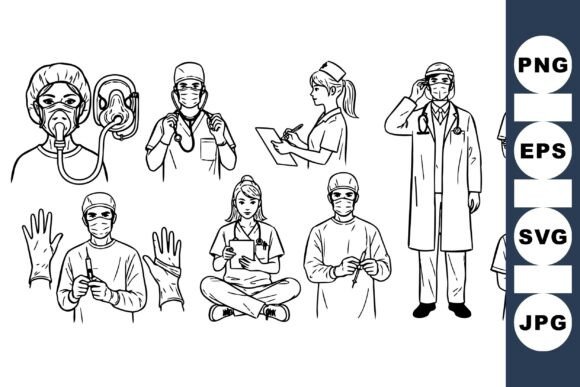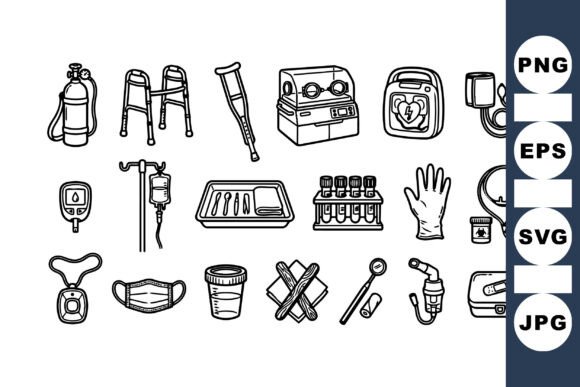
Medical Equipment Clipart Set
A Designer’s First Look: Clean, Calm, and Purposefully Understated
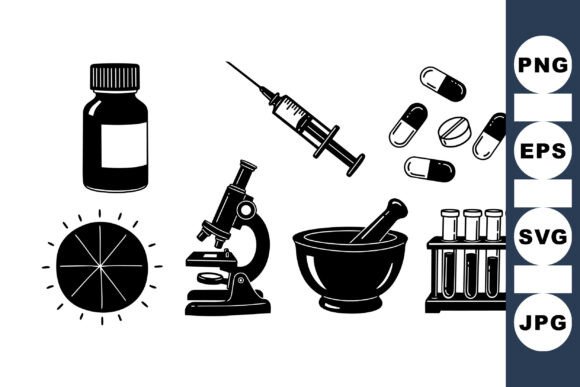
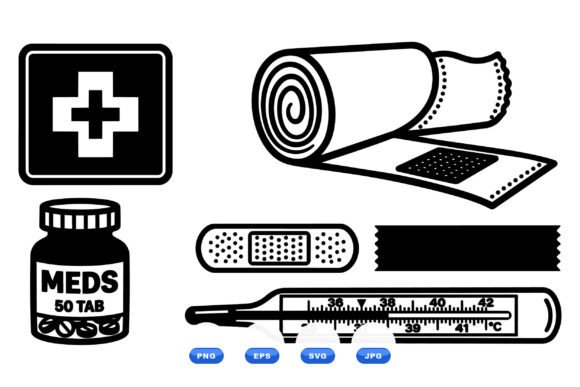
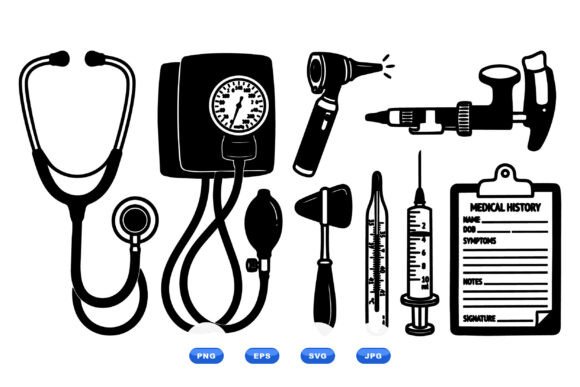
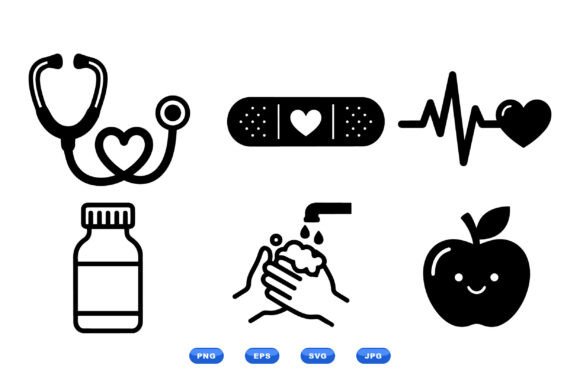
Opening the Medical Equipment Clipart Set, I felt immediate relief — no frantic outlines, no over-rendered shadows, no forced “cute” medical tropes. This is line art drawn with intention: steady, confident strokes; balanced negative space; and a quiet authority that says “healthcare professional,” not “cartoon clinic.” The icons — stethoscope, syringe, heartbeat line, pill bottle, ECG waveform, thermometer, medical cross — all breathe with consistent weight and rhythm. As an embroidery designer who’s stitched everything from neon floral patches to dense monogrammed baby blankets, I knew right away this set wouldn’t scream for attention — it would earn respect.
Where It Lives Best: Thoughtful Embroidery Projects with Real Purpose
I recently sketched out a custom embroidered tote bag for a local nurse practitioner’s private practice launch — minimalist branding, durable cotton canvas, subtle but unmistakable identity. That’s where the Medical Equipment Clipart Set shines. Its clean lines translate beautifully into satin stitch borders and light fill-stitch interiors without ballooning into visual noise. I tested the stethoscope icon on a sweatshirt mockup: at 3.5 inches wide, it held crisp corners, legible curves, and enough breathing room between elements to avoid thread crowding. On a baby onesie? The smaller icons — like the simplified heart or cross — scaled down cleanly for running-stitch accents near the collar. For holiday embroidery, think embroidered tea towels gifted to hospital staff — elegant, functional, quietly meaningful. And for Etsy sellers offering personalized gifts? A single-line ECG waveform stitched in soft grey thread on a linen pillow cover reads as both modern and compassionate — not clinical, not cold.
Where to Pause — Not Limitations, Just Considerations
This isn’t a “throw-it-on-anything” design set. Its strength is clarity — so its limits are where clarity gets compromised. On stretchy fabric like ribbed knit caps, fine linework can distort unless stabilized aggressively. Tiny details — say, the needle tip on the syringe or the dial markings on the thermometer — need careful hooping and a mid-weight stabilizer to prevent puckering or skipped stitches. On dark fabric, contrast matters more than usual: a single-layer outline in light thread may vanish unless backed with underlay or paired with a subtle fill. And while the set includes PNGs and SVGs, remember — those aren’t machine embroidery files. You’ll need to digitize each icon thoughtfully: adjust stitch density for breathable fabrics (like gauzy nursery curtains), simplify corners for small hoop sizes (under 4×4”), and avoid tight clusters of overlapping lines if stitching on textured toweling or fleece.
Real Talk for Craft Business Owners
If you’re an Etsy seller or small shop owner building a healthcare-themed collection — scrubs patches, nurse appreciation mugs with embroidered applique designs, or boutique-branded aprons for clinic cafés — the Medical Equipment Clipart Set gives you cohesive, brand-safe assets. Its editorial-grade simplicity means your finished product feels intentional, not clip-art-derived. Customers notice that. A hand-stitched patch using the cross icon reads as handmade product, not mass-printed swag — especially when paired with quality thread and thoughtful placement. That builds trust. It also supports giftability: a personalized gift for a med student’s graduation feels elevated because the design doesn’t shout; it listens.
Practical Notes Every Embroidery Designer Should Run Through
- Test first — Stitch the smallest icon on scrap fabric matching your final project’s weight and stretch.
- Check thread color contrast — Especially on light/dark fabric pairings. Try black, navy, charcoal, and heather grey in mockups.
- Review stitch density — Light fill areas should stay breathable on baby embroidery or summer apparel.
- Confirm hoop size compatibility — Some icons scale well, but intricate versions may exceed standard hoops without simplification.
- Inspect small details — Zoom in on vector files before digitizing. Are anchor points clean? Are strokes uniform?
- Mock it in black and white — If it reads clearly without color, it’ll stitch cleanly.
- Use proper stabilizer — Cutaway for knits, tear-away for stable wovens, mesh for lightweight linens.
- Verify licensing — Since this is a Graphics product sold in Crafts, confirm whether commercial embroidery use (e.g., selling finished embroidered patches) is permitted before listing on Etsy or at craft fairs.
Final Thought: Design That Supports, Not Distracts
The Medical Equipment Clipart Set doesn’t try to be everything. It’s not whimsical, not flashy, not overloaded with variants. It’s focused. That focus makes it unusually versatile — for a boutique’s understated branding, a handmade product line built on sincerity, or a personalized gift that honors quiet dedication. In embroidery, where every stitch carries weight and texture, that kind of restraint is rare — and valuable. Whether you’re digitizing for a custom apparel order or building digital embroidery file bundles for other makers, this set gives you clean source material that respects both the craft and the context. It’s not just medical clipart. It’s thoughtful design infrastructure — ready to stitch, ready to mean something.