Medical Anatomy Doodle Clipart Set
A Designer’s First Look: Playful, Not Precise
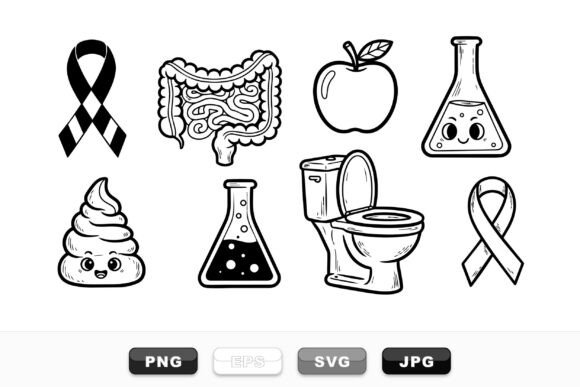
Opening the Medical Anatomy Doodle Clipart Set, I felt an immediate shift in tone—this isn’t clinical illustration or medical textbook art. It’s warm, slightly irreverent, and unmistakably hand-drawn. The digestive system parts aren’t labeled or anatomically rigorous; they’re simplified, rounded, and friendly. That smiling poop emoji? It lands with charm—not shock value. Paired with apples, lab flasks, toilets, and awareness ribbons, the set leans into wellness humor and gentle health advocacy. As an embroidery designer who regularly tests graphics for real-world stitchability, my first thought wasn’t “Is this accurate?” but “Will this hold up under thread—and will people *want* it on their tote bag?”
Where This Set Shines: Embroidery Projects with Personality
I recently sketched a custom embroidered tote for a local naturopathic clinic’s staff appreciation day. They wanted something lighthearted but profession-adjacent—no sterile icons, no stock clipart. The Medical Anatomy Doodle Clipart Set fit like a glove. I used the apple + flask combo (scaled to 3.2” wide) on a natural canvas tote, stitched in soft sage and cream thread. On fabric, the doodle quality translated beautifully: clean outlines held up, the curves stitched smoothly, and the open shapes avoided dense fill-stitch pitfalls. It felt handmade—not digital.
This set works especially well for:
- Custom apparel—think sweatshirt embroidery for nursing students or GI clinic staff;
- Embroidered patches for aprons, backpacks, or baby onesies (the smiling poop + ribbon combo is unexpectedly sweet on organic cotton);
- Kitchen towels and tea towels, where the apple or toilet doodles add wit without crossing into kitsch;
- Nursery decor and baby embroidery, particularly the ribbons and simplified organs—soft, symbolic, and age-appropriate when stitched with matte cotton thread;
- Holiday or awareness-themed gifts, like embroidered pillow covers for Digestive Health Awareness Month (March) or back-to-school caps for pre-med students.
Where to Proceed With Care
Not every doodle translates equally well to thread. The Medical Anatomy Doodle Clipart Set is black-and-white line art—clean for printing, but embroidery demands more nuance. Here’s what I watched for:
- Small hoop sizes: The tiny details—like flask stoppers or ribbon loops—can blur or vanish below 2.5”. Test at your smallest working hoop before committing to a cap or baby hat.
- Textured or stretchy fabric: On terry cloth towels or lightweight knits, fine linework may pucker or distort. Use cutaway stabilizer, not tear-away, and consider simplifying outlines in your digitizing software.
- Dark fabric backgrounds: Since the set is monochrome line art, contrast relies entirely on thread color choice. A light gray satin stitch on navy won’t read as clearly as a crisp white running stitch—mock it up digitally first.
- Dense stitch areas: Avoid stacking multiple small elements (e.g., all five ribbons + the toilet + apple) in one tight cluster. Fill stitches can overwhelm delicate doodle rhythm. Prioritize one focal element per finished product.
What It Adds—and What It Doesn’t Claim—to Your Craft Business
As an Etsy seller and small shop owner myself, I judge design assets by how they support trust, clarity, and perceived value—not just visual appeal. The Medical Anatomy Doodle Clipart Set strengthens brand consistency for makers who lean into approachable wellness: herbalists, lactation consultants, functional medicine practitioners, even gastroenterology offices wanting patient-friendly merch. Customers recognize the tone instantly—it says “we care, but we don’t take ourselves too seriously.” That builds engagement far more than generic heart or cross icons.
It doesn’t claim precision—and that’s its strength. You won’t use it for medical device packaging or academic presentations. But for a personalized gift—a baby blanket with a smiling colon doodle and “Healthy Gut, Happy Baby” stitched beside it? Yes. For a boutique apron line targeting holistic chefs? Absolutely. It elevates the handmade product by feeling intentional, not algorithmic.
Practical Notes from the Hoop
Before stitching your first project with the Medical Anatomy Doodle Clipart Set, here’s what I do—and recommend:
- Test on scrap fabric first, using your actual thread colors and stabilizer. Doodle lines behave differently on linen vs. cotton poplin.
- Check thread color contrast—especially if stitching on heathered or oatmeal fabrics where mid-tones can mute detail.
- Review stitch density in your embroidery software. Some cartoon outlines may digitize with overly tight satin stitches—loosen tension slightly or switch to running stitch for cleaner flow.
- Confirm hoop size compatibility. If you embroider primarily on 4×4 hoops, avoid scaling the full digestive system layout—break it into individual organs instead.
- Inspect small details at 200% zoom: are inner loops closed? Are ribbon ends tapered enough to prevent thread nests?
- Test in black-and-white mockups to assess silhouette strength—this set relies on shape recognition, not shading.
- Compare light and dark fabric backgrounds side-by-side. A design that pops on ivory may disappear on charcoal unless thread is adjusted.
- Use proper stabilizer: medium-weight cutaway for knits, tear-away for stable wovens, and water-soluble for delicate layers like napkins or lace overlays.
- Verify licensing before selling finished items or bundling the graphics into digital embroidery files. Since this is a Graphics product in the Crafts category, commercial use terms aren’t stated outright—check the seller’s policy carefully.
Final Thought: A Refreshing Niche Asset
The Medical Anatomy Doodle Clipart Set won’t replace your anatomy atlas—but it might become your go-to for stitching joy into wellness. It’s not about perfection. It’s about resonance. When a customer sees that smiling poop on a kitchen towel and laughs, then pauses to read the ribbon beside it—that’s connection. That’s why I keep it in my active design folder, not my archive. It’s practical, personality-forward, and quietly versatile—if you meet it where it lives: in the space between science and smile.