Health Icons Medical Line Art Set
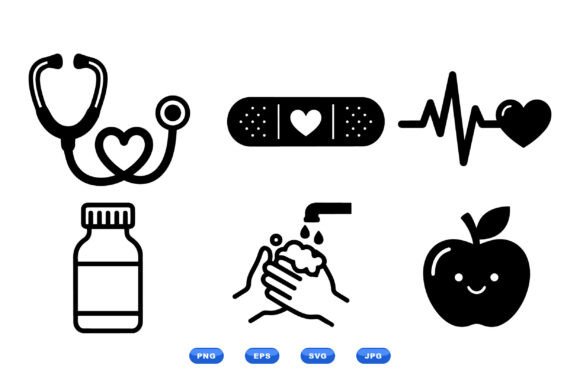
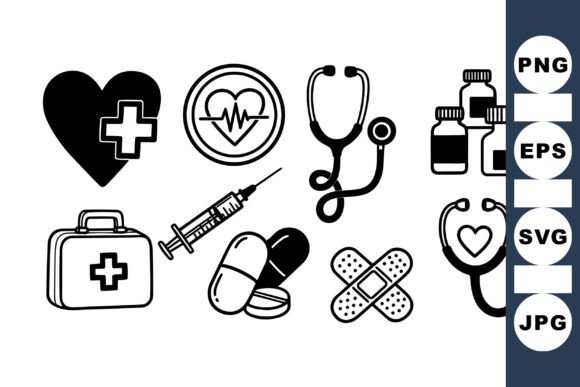
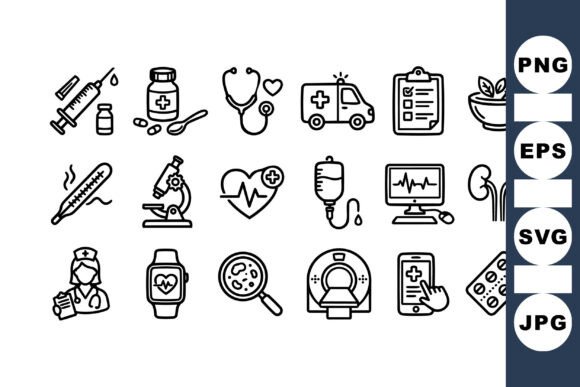
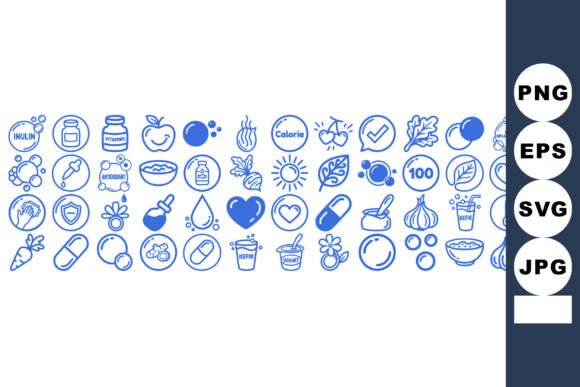
As someone who’s stitched everything from probiotic-themed baby onesies to wellness-branded aprons for local cafes, I opened the Health Icons Medical Line Art Set expecting clean simplicity—and got exactly that. No cluttered outlines, no overwrought details. Just confident, friendly line art: a yogurt cup with swirls, a capsule icon with subtle crosshatch, a leafy sprout, a smiling gut bacterium (yes, really), and a few minimalist heart-and-leaf hybrids. It’s playful without being childish, clinical without feeling cold—perfect for makers who want health-conscious charm, not hospital sterility.
First Stitch, First Impression
I pulled one of the smaller icons—a tiny kombucha bottle—into my embroidery software and scaled it to 2.5 inches wide for a linen tea towel. Right away, the line weight felt right: consistent, medium-thin, and forgiving. Not so fine that it’d vanish in satin stitch, not so bold that it’d overwhelm a delicate fabric. The curves are smooth, the corners rounded just enough to avoid thread piling or jump stitches on tighter turns. This isn’t a design built for photorealism—it’s built for translation: from screen to needle, from vector to thread, from concept to tactile object.
I stitched it onto a lightweight cotton-linen blend using a light tear-away stabilizer and 40-weight polyester thread. The result? Crisp, legible, and quietly confident. Customers browsing my Etsy shop wouldn’t pause to decode it—they’d instantly recognize it as “wellness,” not “warning.” That matters. Especially when you’re selling embroidered kitchen towels to yoga studio owners or custom sweatshirts to naturopathic clinics.
Where It Shines (and Where It Pauses)
The Health Icons Medical Line Art Set works beautifully for small-to-medium embroidery projects where clarity and warmth matter more than complexity. Think:
- Tote bag designs — centered on natural canvas or unbleached cotton, these icons read cleanly at 3–4 inches, especially when paired with soft, earthy thread colors like sage, oat, or clay.
- Baby embroidery — a single probiotic berry icon on a bamboo onesie feels gentle and intentional, not medicalized. Avoid dense fill areas here; stick to running or outline stitches for breathability.
- Embroidered patches — the clean lines translate well to merrow-edged or heat-seal backing. Just confirm your patch maker can handle open-line motifs without filling gaps unintentionally.
- Holiday embroidery — imagine a gingerbread-shaped capsule icon on a linen stocking, or a tiny heart-and-kale motif on a handmade ornament. It adds thematic relevance without cliché.
- Small shop product branding — use one icon as a subtle tagline accent on packaging labels, woven into a boutique’s gift tags, or stitched discreetly on the hem of an apron.
That said, this set isn’t magic. It needs thoughtful placement. On stretchy fabrics like ribbed knits or thin jersey tees, those fine lines can distort if stabilizer isn’t layered correctly—or if hoop tension slips mid-stitch. On dark fabric, test contrast early: a light gray line may disappear unless you add a subtle underlay or switch to white thread. And avoid cramming multiple icons into a tiny hoop (under 3 inches) unless you’re willing to simplify shapes manually—some corners and inner loops lose definition when shrunk too far.
What It Does for Your Craft Business
Let’s be real: customers don’t buy embroidery files. They buy *feeling*. A sense of care. A hint of expertise. A quiet alignment with their values. The Health Icons Medical Line Art Set supports that. It doesn’t scream “I’m healthy!”—it whispers “I pay attention to what nourishes me.” That tone elevates handmade products. A personalized gift with this icon feels considered, not generic. A boutique sweatshirt with a subtle probiotic leaf feels cohesive—not like clipart slapped on.
For Etsy sellers and craft fair vendors, that nuance builds trust. Buyers scrolling past dozens of “wellness” listings will pause longer on something that looks intentionally designed—not algorithmically assembled. And because the set includes SVG and EPS files, it’s easy to tweak spacing, resize proportionally, or pair with hand-lettered phrases for printable mockups or digital product previews.
Practical Notes Every Embroidery Designer Should Check
Before stitching your first Health Icons Medical Line Art Set piece, do these five things:
- Test on scrap fabric — same fiber, same weight, same stabilizer combo you’ll use on the final piece. Watch how corners hold up and whether thin strokes feather.
- Review stitch density — line art often relies on running or satin stitch. If your machine defaults to heavy underlay, reduce it. You want flow, not bulk.
- Confirm hoop size vs. icon scale — especially for curved surfaces like caps or baby hats. A 2-inch icon might fit perfectly on a flat tote but buckle on a rounded crown.
- Inspect small details in black-and-white mockups — some icons include tiny internal lines (like seed dots inside a capsule). Will they stitch clearly at your intended size? Or vanish?
- Verify licensing — since this is a Graphics product sold for Crafts use, double-check whether commercial embroidery (i.e., selling finished embroidered items) is permitted. When in doubt, contact the seller directly before listing on Etsy or launching a small shop product.
Also: don’t skip the stabilizer step—even on stable fabrics. These icons rely on precision. A slight shift ruins the balance of a symmetrical capsule or misaligns a sprout’s stem. And if you’re planning applique design work, remember that clean line art like this pairs beautifully with neutral fabric scraps underneath—think organic cotton or undyed muslin for a soft, grounded effect.
A Final Thought for Makers
The Health Icons Medical Line Art Set won’t replace your original sketches—but it might become your go-to shortcut for moments when authenticity and efficiency need to coexist. It’s the kind of design that works as hard as you do: clear enough for beginners, refined enough for pros, versatile enough for baby blankets and boutique merch alike. Just remember: great embroidery starts long before the needle drops. It starts with choosing assets that respect your time, your tools, and the people who’ll hold your finished product in their hands.